Last updated: October 28, 2026
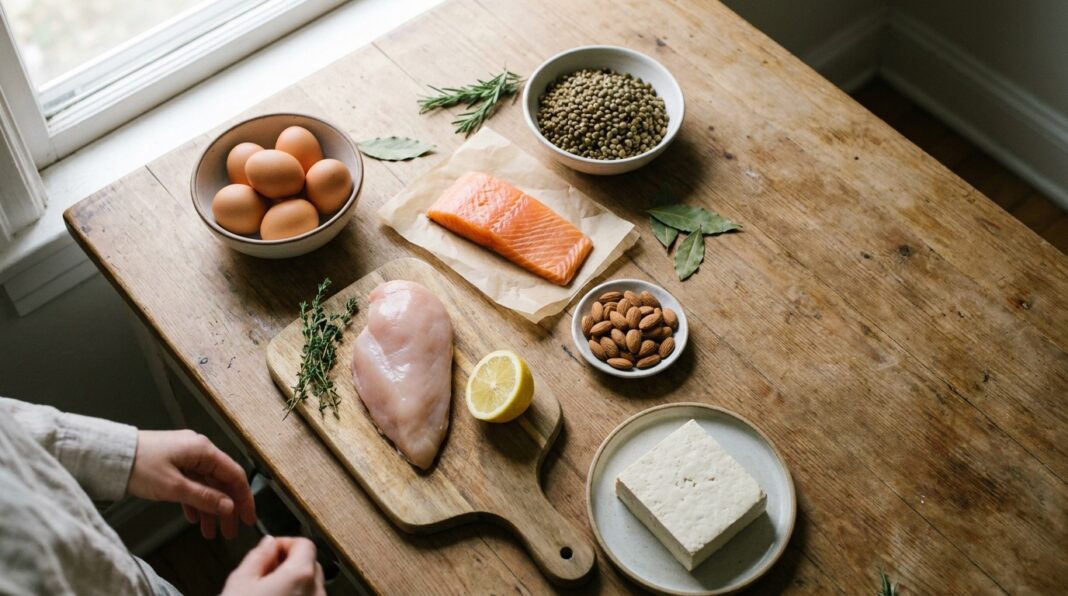
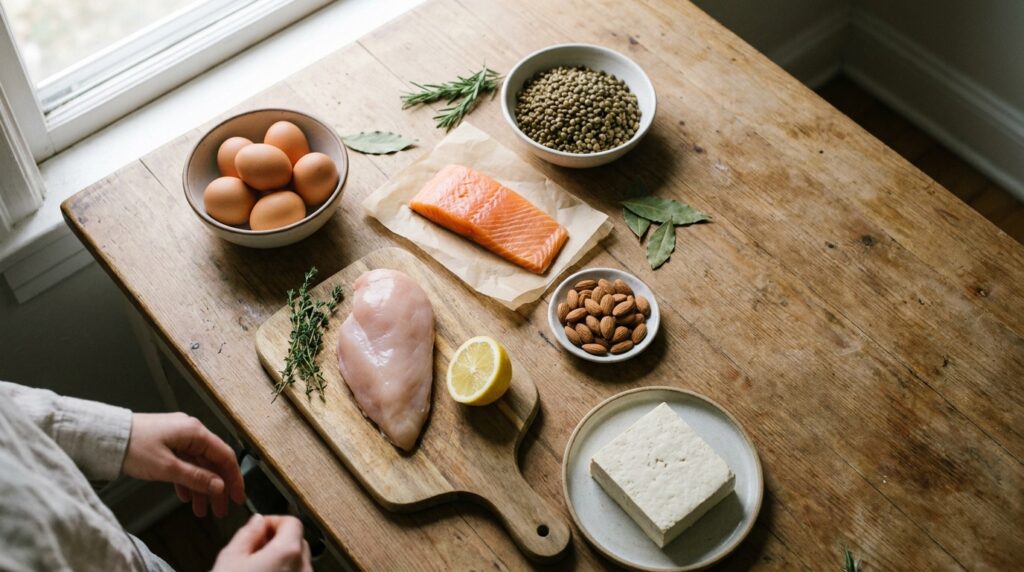
For clean eating, the best protein foods are whole and minimally processed: eggs, poultry, seafood, lean meat, beans, peas, lentils, nuts, seeds and soy. The 2025-2030 Dietary Guidelines for Americans say to eat a variety of them and set a daily goal of 1.2 to 1.6 grams of protein per kilogram of body weight.
Key takeaways
- The 2025-2030 Dietary Guidelines set a protein goal of 1.2 to 1.6 grams per kilogram of body weight a day. That is above the long-standing RDA of 0.8 grams per kilogram.
- No regulator defines “clean eating.” The closest official advice is to choose minimally processed whole foods and limit highly processed ones.
- Pick plain meat without added sugars or starches, and include plant proteins such as beans, lentils and soy.
- Aim for at least 8 ounces of seafood a week on a 2,000-calorie diet.
- Use a food thermometer. Poultry is safe at 165°F, ground meat at 160°F and fish at 145°F.
This article is general information, not medical advice. Talk with your doctor or a registered dietitian about your own needs, especially if you are pregnant, take medication or have a health condition.
What does “clean eating” mean for protein?
“Clean eating” is a marketing term with no legal definition. The federal guidelines come closest. According to MedlinePlus, from the National Library of Medicine, the newest guide encourages eating minimally processed whole foods that are naturally high in nutrients, and it discourages highly processed foods such as packaged snacks, sugary drinks and frozen dinners.
For meat, the guidelines are specific. As summarized by the National CACFP Association, they say to consume meat with no or limited added sugars, refined carbohydrates or starches, or chemical additives, and to flavor it with salt, spices and herbs if you like.
In practice, plain chicken thighs or a bag of dry lentils fit that advice better than breaded nuggets or honey-glazed deli meat. Read the ingredient list to see which kind you have.
How much protein do you need per day?
You will see two official numbers. According to the American College of Cardiology, the 2025-2030 guidelines recommend prioritizing protein at every meal, raising the Recommended Dietary Allowance set by the National Academy of Sciences from 0.8 g/kg of body weight per day in healthy adults under 75 to 1.2-1.6 g/kg. The goal can be adjusted as needed based on your individual caloric requirements.
The higher goal is debated. The ACC notes it is a shift not included in the 2025 DGAC report, the advisory committee’s scientific review. A perspective article indexed in PubMed says the recommendations rely on a rapid systematic review of randomized controlled trials focused on weight-management outcomes.
To find your range, divide your weight in pounds by 2.2 to get kilograms, then multiply by each number. Figures are rounded to the nearest gram:
| Body weight | RDA (0.8 g/kg) | Guidelines low end (1.2 g/kg) | Guidelines high end (1.6 g/kg) |
|---|---|---|---|
| 120 lb (about 55 kg) | 44 g | 65 g | 87 g |
| 150 lb (about 68 kg) | 55 g | 82 g | 109 g |
| 180 lb (about 82 kg) | 65 g | 98 g | 131 g |
| 200 lb (about 91 kg) | 73 g | 109 g | 145 g |
Needs change over a lifetime. For more on that, see our guide to balancing nutrition for every age.
Which protein foods count, and what is one serving?
According to MedlinePlus, protein foods include meat, poultry, seafood, beans and peas, eggs, processed soy products, nuts and nut butters, and seeds. These are its example servings:
| Protein food | Example serving | What to look for on the package |
|---|---|---|
| Meat, poultry or seafood | 3 ounces (85 grams), cooked | Plain cuts, skinless poultry |
| Eggs | 1 egg | Nothing added |
| Soy (tofu, tempeh, seitan) | 3 ounces (85 grams) | Added sugar in marinated versions |
| Beans or lentils | 1/2 cup (113 grams), cooked | Dry, or canned with a short ingredient list |
| Peanut butter | 2 tablespoons (35 grams) | Few ingredients, little added sugar |
| Nuts or seeds | 1 ounce (28 grams) | Unsalted and unsweetened |
The grams of protein in a serving depend on the food, the cut and how it is cooked. The Nutrition Facts label gives the exact number.
Which meats and seafood are the best choices?
Lean meats and poultry
MedlinePlus advises choosing meats that are low in saturated fat and cholesterol, such as lean cuts of beef, chicken, and turkey without skin. Unseasoned cuts also make it easy to avoid added sugars and starches.
Seafood
According to the EPA and FDA, the Dietary Guidelines recommend at least 8 ounces of seafood (less for children) per week based on a 2,000 calorie diet. People who are pregnant or breastfeeding should consume between 8 and 12 ounces per week of a variety of seafood from choices that are lower in mercury.
What about bison, venison and other game?
Game meat works in a varied diet the same way other red meat does. You will see online claims that game has far more protein, more omega-3s or anti-inflammatory effects. We could not confirm those claims in official sources, so check the Nutrition Facts label on each package.
Game has its own cooking temperatures. FoodSafety.gov’s chart puts beef, bison, veal, goat, and lamb steaks, roasts and chops at 145°F with a 3-minute rest. It lists rabbit and venison, wild or farm-raised, at 160°F.
Can plant foods cover your protein needs?
Plant proteins are part of the official advice. The guidelines call for a variety of protein foods from animal sources, including eggs, poultry, seafood, and red meat, as well as a variety of plant-sourced protein foods, including beans, peas, lentils, legumes, nuts, seeds, and soy.
Heart experts lean further toward plants. The ACC’s expert analysis says plant-forward eating patterns remain the most consistent dietary strategy for reducing cardiovascular risk. If you want simple ways to get more beans and vegetables on the plate, start with our three simple steps to healthier eating.
Does eating more protein build more muscle?
Not by itself. The guidelines set an intake goal. They do not promise muscle gain, and food alone is not a training plan. The PubMed perspective also says the guidelines give limited attention to the relationship between protein intake and risk for, or management of, diet-related chronic disease, including heart disease, type 2 diabetes and chronic kidney disease.
If you lift weights and want a personal target, a registered dietitian can help you set one. If you have kidney disease or another chronic condition, talk with your doctor before you increase your protein.
Do you need protein powder?
Most people can meet their goal with food. Powder is a shortcut for busy days or for people who regularly fall short. You don’t need it. Also know how it is regulated. Protein powders are sold as dietary supplements, and according to the FDA, under DSHEA, FDA does not have the authority to approve dietary supplements before they are marketed. The agency also advises consumers to talk to their doctor, pharmacist, or other health care professional before deciding to purchase or use a dietary supplement.
If you buy one, check for:
- A short ingredient list that starts with the protein source (whey, milk, soy or pea, for example).
- Grams of protein per scoop on the Supplement Facts panel, so you can count it toward your daily range.
- Little or no added sugar.
One widely sold whey powder is Optimum Nutrition Gold Standard 100% Whey. Its Amazon listing states 24 g of whey protein per scoop from whey protein isolate and concentrate.
As an Amazon Associate, Hometown Publications earns from qualifying purchases.
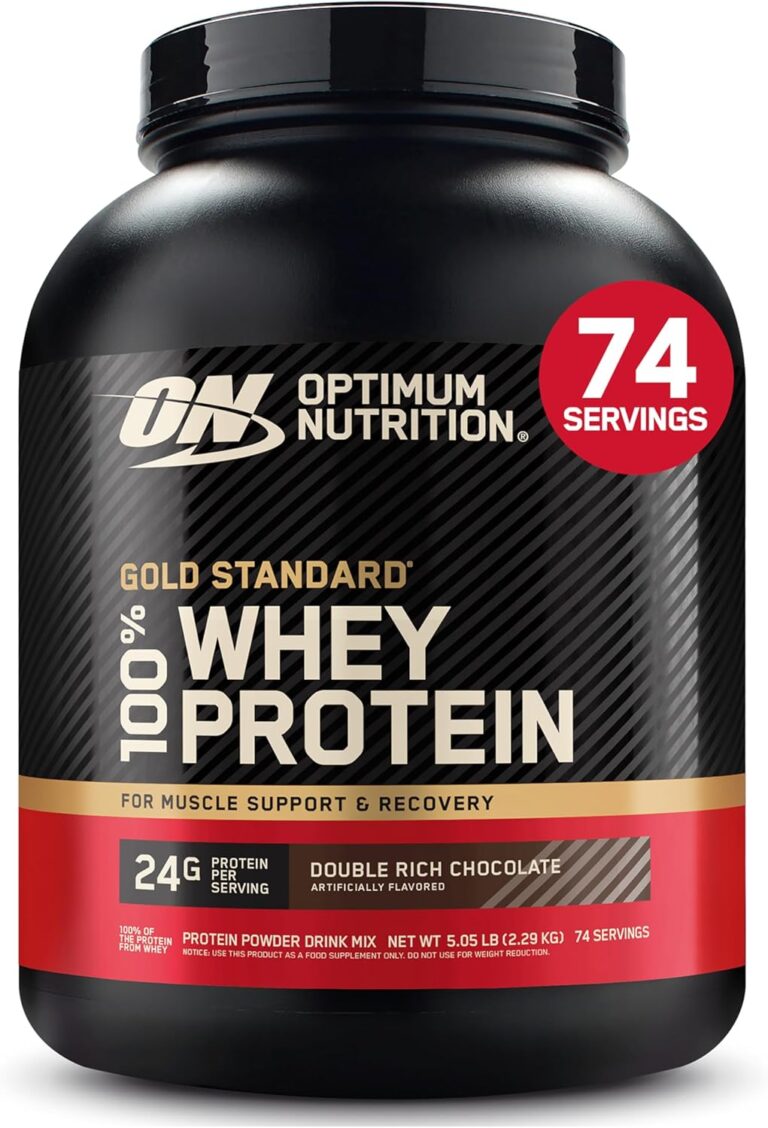
Optimum Nutrition Gold Standard Whey Protein
- 24 g of premium whey protein per scoop from whey protein isolate and concentrate to help build and maintain lean muscle when paired with regular resistance…
- A great choice post run or lift, between meals, with a meal, or any time of day when you need extra protein.
- Loaded with 5.5 g of naturally occurring BCAAs (branched-chain amino acids) and 11 g of essential amino acids (EAAs) to supercharge recovery and get the most…
How do you add protein to every meal safely?
Use this checklist:
- Find your daily range in the table above.
- Spread it across breakfast, lunch and dinner, since the guidelines recommend prioritizing protein at every meal.
- Rotate sources through the week: eggs, poultry, seafood, lean red meat, beans, lentils and soy.
- Plan for at least 8 ounces of seafood a week.
- Buy plain products and check ingredient lists for added sugars and starches.
- Cook to a safe temperature. The USDA FSIS chart lists 165°F for all poultry, 160°F for eggs, and 145°F for fish and shellfish, plus 160°F for ground meats and 145°F with at least a 3-minute rest for beef, pork, veal and lamb steaks, chops and roasts.
- Refrigerate leftovers promptly. A Hawaii Department of Health sheet based on FoodSafety.gov says to never leave these foods unrefrigerated for over two hours, and if the temperature is over 90˚F, not more than one hour.
An instant-read digital thermometer makes step 6 easy. Choose one with a display you can read easily, a thin probe and a waterproof body you can rinse. FSIS says to cook all food to these minimum internal temperatures, as measured with a food thermometer, before removing food from the heat source. One widely sold option is the ThermoWorks ThermoPop 2. Its listing says it is accurate to ±1.0°F and has an IP67 waterproof rating.
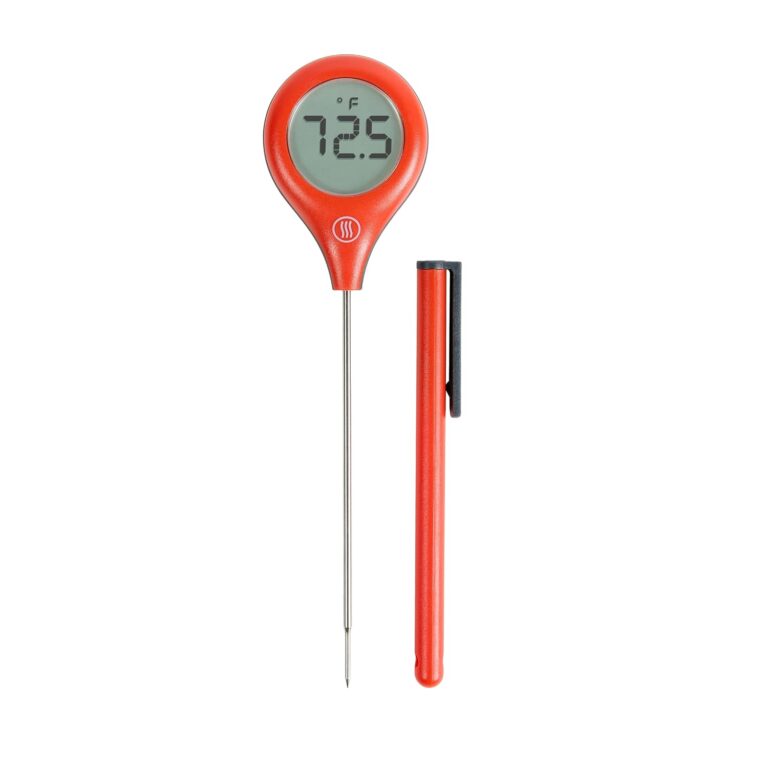
- Get precise temperature readings in just 2-3 seconds.
- Features a 1 ¼-inch backlit screen that auto-rotates for easy viewing from any angle.
- IP67-rated waterproof construction ensures durability and reliability, even in the busiest kitchens.
Owen’s Take
The jump from 0.8 to as much as 1.6 grams per kilogram is getting the headlines. Even the experts are still arguing about it, and the FDA doesn’t approve protein powders before they go on sale. So I’d start with food and start small. Pick the meal where you usually come up short, add one plain protein food there, and keep it up for a month before you change anything else. Small habits like that add up. If you have kidney trouble or another chronic condition, I’m not your doctor. I’m the guy who’ll tell you to actually see one before you raise your intake.
Frequently asked questions
How much protein does a 150-pound adult need?
A 150-pound adult weighs about 68 kilograms. That works out to about 55 grams a day under the 0.8 g/kg RDA, or about 82 to 109 grams a day under the 2025-2030 Dietary Guidelines goal of 1.2 to 1.6 g/kg.
Is “clean eating” an official nutrition term?
No. The federal Dietary Guidelines recommend minimally processed whole foods and say to limit highly processed ones, which is close to what most people mean by clean eating.
How much seafood should I eat each week?
The Dietary Guidelines, as summarized by the EPA and FDA, recommend at least 8 ounces a week on a 2,000-calorie diet, and less for children. People who are pregnant or breastfeeding should eat 8 to 12 ounces a week from lower-mercury choices.
What temperature should venison be cooked to?
FoodSafety.gov lists 160°F for venison and rabbit, whether wild or farm-raised. Bison steaks, roasts and chops are listed at 145°F with a 3-minute rest.
Can I get enough protein without meat?
The 2025-2030 Dietary Guidelines count beans, peas, lentils, nuts, seeds and soy as protein foods. A registered dietitian can help you plan a meat-free diet that meets your goal.
Sources
- MedlinePlus (National Library of Medicine): Dietary Guidelines for Americans 2025-2030
- National CACFP Association: 2025-2030 Dietary Guidelines for Americans Released
- American College of Cardiology: How Do the 2025-2030 Dietary Guidelines for Americans Measure Up for Cardiovascular Health?
- PubMed (National Library of Medicine): Perspectives on the Protein Recommendations in the 2025-2030 Dietary Guidelines for Americans
- EPA and FDA: Advice about Eating Fish and Shellfish
- USDA FSIS: Safe Minimum Internal Temperature Chart
- FoodSafety.gov: Cook to a Safe Minimum Internal Temperature
- Hawaii Department of Health: Food Safety Tips, Minimum Internal Temperatures
- FDA: Questions and Answers on Dietary Supplements