How to Make Fresh Pasta at Home Without a Machine
Making fresh pasta at home requires just flour, eggs, and a rolling pin — no expensive machine needed. This traditional method creates silky, tender noodles perfect for spring meals, connecting you to centuries of culinary tradition while producing a meal that’s infinitely more satisfying than store-bought varieties.
Ingredients
- 400 grams (about 3 cups) all-purpose flour
- 4 large eggs, room temperature
- 1 teaspoon salt
- 1 tablespoon olive oil (optional, for extra richness)
Instructions
- Mound the flour on a clean work surface and create a deep well in the center.
- Crack the eggs into the well and beat lightly with a fork, then gradually drag flour from the inner walls of the well into the eggs until a shaggy dough forms.
- Knead the dough by hand for 8-10 minutes until smooth and elastic.
- Wrap the dough in plastic wrap or cover with a damp towel and let it rest at room temperature for at least 30 minutes.
- Divide the rested dough into 4 portions, working with one piece at a time and keeping the rest covered.
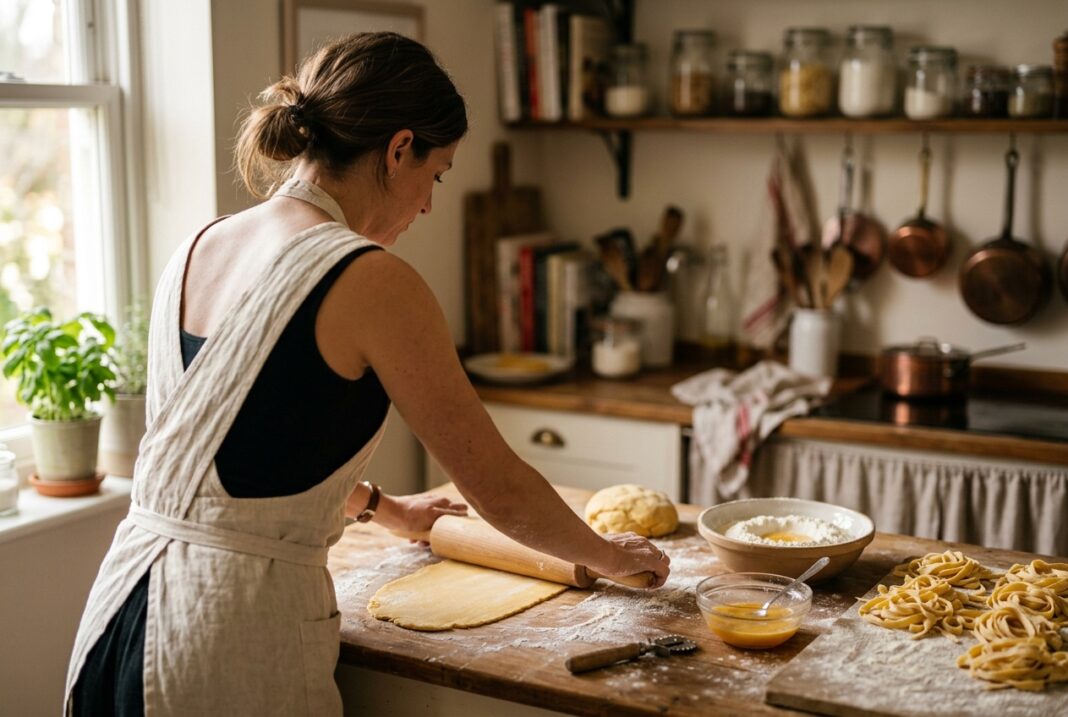
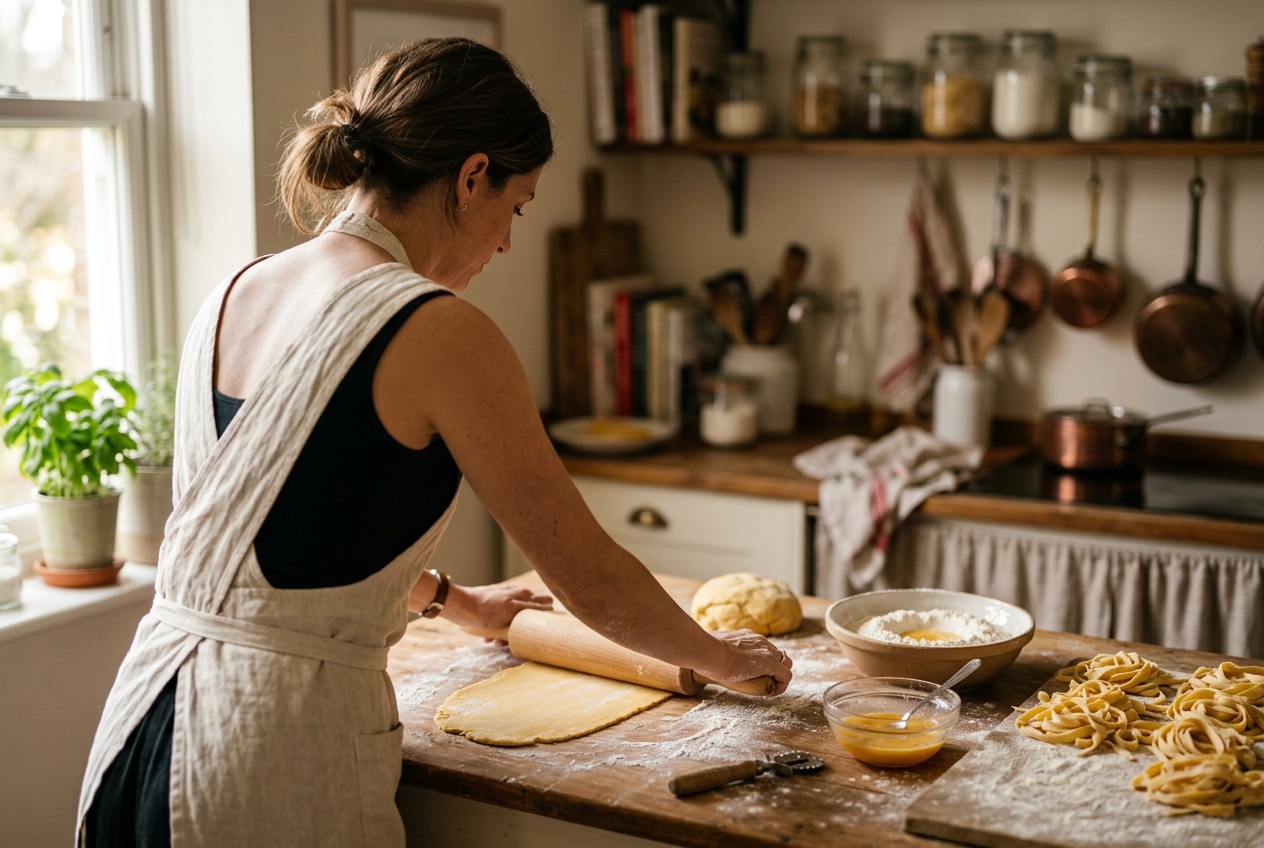
- Roll each portion from the center outward in all directions, rotating the dough 90 degrees every few rolls and dusting the surface and rolling pin frequently with flour.
- Start with firm pressure and lighten your touch as the dough thins, continuing until it’s nearly paper-thin and you can almost see through it.
- Cut the rolled dough into your desired pasta shape and cook in boiling salted water for 2-3 minutes until tender.
Cook’s Notes
Room temperature eggs incorporate more easily into the dough, and kneading for the full 8-10 minutes is essential for developing the gluten structure that gives fresh pasta its signature chew. Don’t skip the resting period — food science shows that well-rested dough allows the flour to fully hydrate and the gluten to relax, so it rolls more evenly and won’t snap back into a thicker shape.
Ingredient Swaps
For extra richness, you can add a tablespoon of olive oil to the dough, though authentic Italian pasta relies on just flour and eggs. The classic ratio of 100 grams of flour per egg can be scaled up or down depending on how many servings you need.
Serving Suggestions
This fresh pasta is well suited to simple, light spring meals — toss it with a good olive oil, fresh herbs, or a light butter sauce to let the tender texture and flavor shine through.
Storage & Reheating
Store any uncooked fresh pasta in the refrigerator for up to a day, well-dusted with flour to prevent sticking, or freeze it on a tray before transferring to a bag for longer storage. Cooked leftover pasta keeps in an airtight container in the fridge for 1-2 days and reheats best gently in a pan with a splash of water or sauce.
Common Questions
What ingredients do you need for homemade fresh pasta?
Fresh pasta requires only flour, eggs, and a pinch of salt, using a traditional ratio of 100 grams of flour per egg. For four servings, use 400 grams of all-purpose flour, 4 large eggs, and 1 teaspoon of salt.
What’s the best technique for rolling pasta without a machine?
Roll the dough from the center outward in all directions, rotating it frequently and dusting with flour to prevent sticking, starting with firm pressure and lightening your touch as it thins. Aim for a paper-thin consistency where you can almost see through the dough.
How long should you rest pasta dough before rolling?
Pasta dough should rest for at least 30 minutes at room temperature, wrapped in plastic wrap or covered with a damp towel. This allows the gluten to relax so the dough rolls out easily without snapping back.